If you are eyeing a Bal Harbour oceanfront address or a Golden Beach condo, the amenity lists can feel like a new language. Beach service, house cars, wellness suites, and private dining rooms sound enticing, but you also want clarity on how they work and what they really cost. This glossary breaks down common amenity terms you will see in Bal Harbour and the Golden Beach area, explains how buildings run them, and highlights the budget items that affect your monthly dues. You will also get a simple tour plan, a scoring method, and must‑ask questions to compare towers with confidence. Let’s dive in.
Amenity glossary and costs
Get clear on what each amenity means in practice and what typically drives expenses in Bal Harbour and nearby Golden Beach.
Beach service and private beach
Beach service means a resident‑only beachfront setup with chairs, umbrellas, towels, attendants, and sometimes food and beverage. In this area, service is often run by a vendor or managed by building staff under a vendor agreement. Expect seasonal staffing changes and equipment storage on site.
Key cost drivers:
- Labor for attendants and setup
- Vendor contract terms and insurance
- Chair and umbrella replacement
- Any local coastal permitting or beach renourishment contributions
Private dining and event rooms
These are reservable rooms with formal seating and a service or chef’s kitchen. Most buildings charge a reservation fee, a damage deposit, and cleaning or staffing fees. Some offer a limited number of complimentary uses per year.
Key cost drivers:
- Staffing for setup, service, and cleaning
- Tableware and linen replacement
- HVAC, AV, and cleaning for the space
- Event insurance requirements
Wellness suites and cold plunge
Wellness areas include treatment rooms, steam and sauna, hydrotherapy, and cold plunge pools. These are mechanical spaces with strict sanitation and water‑quality protocols. Some buildings offer on‑site therapists on a fee‑for‑service basis.
Key cost drivers:
- Utilities for hot and cold pools
- Chemicals and water treatment systems
- Specialized mechanical maintenance and HVAC
- Higher cleaning frequency and insurance exposure
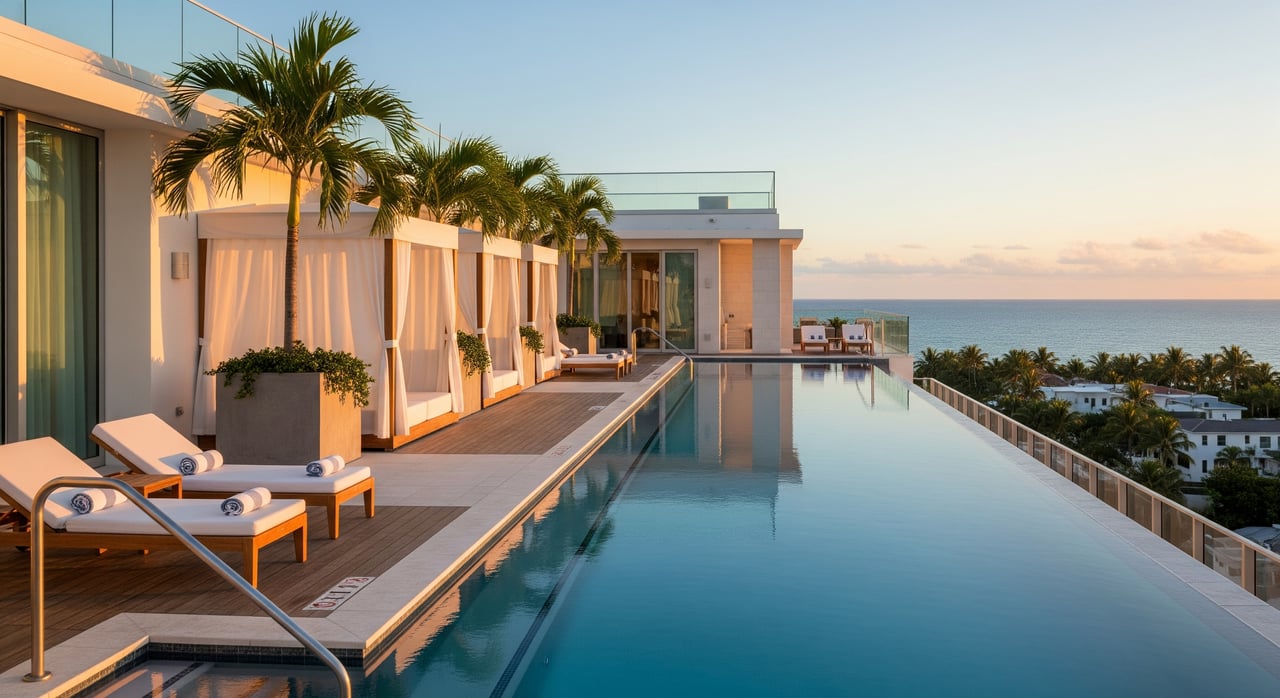
Pool complexes and cabanas
Expect lap pools, lounge pools, and private cabanas. Policies vary on lifeguards, heating schedules, and cabana reservations. Furniture and surfaces need routine care due to sun and salt exposure.
Key cost drivers:
- Heating and filtration pumps
- Surface and deck furniture maintenance
- Lifeguard or attendant staffing
- Seasonal repair cycles
House cars and chauffeur service
House cars offer resident rides for local trips such as shopping or airport runs. Buildings may run a schedule or on‑demand service with limits. Use can be fully included or pay‑per‑use.
Key cost drivers:
- Driver wages and benefits
- Vehicle purchase or leases and maintenance
- Insurance, fuel, and parking
- Scheduling systems and administrative overhead
Marina access and boat slips
Some properties include on‑site or affiliated docks and slips. Ownership models differ: slips can be deeded, leased from the association, or operated by a third‑party marina. Access rules and fees vary by agreement.
Key cost drivers:
- Dredging, dock repairs, and pile replacement
- Insurance and utilities at slips
- Third‑party management fees
- Storm and hurricane repair exposure
Valet, security, and concierge
These front‑of‑house services manage arrivals, guest flow, parking, and safety. Because they require 24/7 shift coverage, they are often a major operating expense.
Key cost drivers:
- Staffing and overtime across shifts
- Uniforms and equipment
- CCTV and system upgrades
- Background screening and training
Business center and workspaces
Shared offices, conference rooms, or private work pods are common. Associations manage reservations, cleaning, and network performance. Some offer receptionist or tech support.
Key cost drivers:
- Network and AV maintenance
- Furnishings and cleaning
- Any staffed reception or IT support
In‑unit and hotel‑style services
These include housekeeping, in‑unit dining, and on‑site restaurant or café options. In flagged developments, agreements may define which costs sit with the hotel or the residential HOA.
Key cost drivers:
- Payroll and supplies for service teams
- Compliance with brand standards
- Cost allocation between hotel and residential components
How amenities impact HOA dues
Amenities show up in your monthly assessment and, in some cases, as separate fees. Understanding the line items helps you forecast your total cost of ownership.
Where costs show in budgets
- Operating expenses: payroll, utilities, supplies, and vendor contracts for items like beach service, pools, and security
- Reserve fund: planned savings for large replacements such as marina piles, pool finishes, or spa mechanicals
- Special assessments: one‑time charges for underfunded or unforeseen capital needs like dredging or major spa rework
- User fees: per‑use charges for private dining rooms, house cars, or slip rentals that offset operating costs
Funding models you will encounter
- Fully included: all amenity costs are built into monthly dues
- Hybrid: basics in dues with premium or event‑level services billed separately
- Optional or membership: separate fees to access certain amenities such as a fitness club or dining membership
- Third‑party vendor: vendor charges residents directly and may share revenue with the association
- Deeded vs leased slips: deeded slips carry separate taxes and assessments; leased slips have ongoing slip fees managed by the association or a marina operator
What to request before you bid
Ask for the association’s resale package and review these items in detail:
- Current operating budget and latest actuals
- Last 2 to 3 years of audited or reviewed financials
- Most recent reserve study with contributions and timelines
- Minutes from the last 12 months of board meetings
- Major vendor contracts: beach, marina, valet/security, pool/spa, and fitness
- Insurance declarations, including marina liability if applicable
- Rules and reservation policies for private spaces and house cars
- Any hotel flag or management agreement outlining cost allocation
Comparison framework
Use a simple, repeatable approach to shortlist buildings that fit your lifestyle and budget.
Score amenities by impact
Rate each amenity on three axes using a 1 to 5 scale:
- Availability: can you reliably access it when you want?
- Operational intensity: how much staffing and complexity does it require?
- Cost risk: what is the long‑term maintenance or storm risk?
Example: A private marina might score A:4, O:4, C:5. High totals signal a need for deeper due diligence and potentially higher dues or reserves.
Smart questions during tours
- Who operates each amenity: the HOA, a vendor, or a hotel operator?
- Is it included in dues, or are there separate membership or per‑use fees?
- How is capacity managed and booked for beach setups, cabanas, and dining rooms?
- For marina access: are slips deeded or leased, and how are dredging or storm repairs funded?
- For wellness and pools: what are the maintenance protocols and water‑quality testing logs?
- What was the last major capital project, its cost, and whether it required a special assessment?
- What is staffing turnover for concierge, security, and maintenance?
- Are any assessments, litigation, or insurance claims pending that relate to amenities?
Five‑stop tour plan
- Stop 1: Lobby and valet. Observe staffing levels, arrival flow, and parking operations.
- Stop 2: Pool and beach. Inspect deck finishes, cabana furniture, equipment storage, and lifeguard stations.
- Stop 3: Wellness and fitness. Review water‑treatment logs, maintenance vendors, and reservation rules.
- Stop 4: Private dining and lounges. Request sample invoices and booking terms.
- Stop 5: Marina and mechanicals. Confirm slip ownership, observe dock condition, and ask for inspection or dredging reports.
Red flags worth noting
- Vague or undisclosed vendor contract terms
- Reserve studies that omit mechanical or marine assets
- Repeated special assessments tied to the same amenity
- Obvious deferred maintenance like peeling decks or corrosion at docks
- Blurred cost allocation between a hotel component and the residential HOA
- Access policies that create long waitlists or uncertainty
Florida and coastal realities
Florida’s legal and coastal context matters when you evaluate amenity heavy buildings in Bal Harbour and Golden Beach.
Florida condo rules in practice
Florida’s condominium statutes require associations to prepare budgets, maintain records, and provide financial statements. Use the official resale package to confirm how each amenity is funded. Reserve studies should reflect high‑cost mechanical and marine elements.
Coastal and marine risk
Beachfront and marina features face storm exposure, sedimentation, and permitting requirements. Dredging, dock repairs, and coastal mitigation can lead to capital projects that exceed annual operating budgets. Ask about storm history, insurance claims, and any past assessments tied to marine or coastal work.
Insurance and liability scope
Pools, spas, marinas, and house cars increase insurance needs and can affect premiums. Request the master policy summary and ask about recent premium changes, coverage limits, and any exclusions related to amenities.
Hotel flags and cost allocation
If a building is tied to a hotel brand, review the agreements that allocate costs between resort and residential components. Confirm revenue sharing, priority use rules, and any cross‑charges that affect your dues.
Tax points for deeded slips
Deeded boat slips can carry separate tax assessments and transfer rules. Verify whether slips are deeded or leased and how their costs or fees are handled by the association or marina operator.
Next steps
Use this framework to shortlist with clarity:
- Before touring: request the budget, financials, reserve study, major vendor contracts, insurance summary, and recent board minutes.
- During tours: follow the five‑stop plan and ask the priority questions. Photograph visible conditions.
- Scoring: rate each amenity by availability, operational intensity, and cost risk. Favor must‑have features that score high on access and lower on risk.
- Professional review: have an attorney or condo specialist review the resale package, hotel or marina agreements, and insurance. Model potential assessments and insurance volatility in your total cost.
When you are ready to compare flagship towers or secure a private showing, schedule a confidential consultation with Anthony Clemenza. You will get boutique, founder‑led guidance tailored to Bal Harbour and Golden Beach, with the discretion, hospitality know‑how, and transaction rigor expected at the ultra‑luxury level.
FAQs
What does beach service usually include?
- Expect reserved chairs and umbrellas, towel service, staffed attendants, and sometimes food and beverage, typically operated by a vendor or building staff.
How do amenities affect monthly HOA dues?
- High‑touch, labor‑intensive features like valet, security, pools, and wellness areas increase operating costs and reserves, which can raise monthly dues.
What should I ask about marina slips in Golden Beach?
- Confirm whether slips are deeded or leased, how dredging and storm repairs are funded, and what insurance coverage applies to docks and slip utilities.
Are cold plunges and spa features costly to maintain?
- Yes. They require strict sanitation, chemicals, specialized mechanical systems, and higher cleaning frequency, which increases operating costs.
How do hotel‑branded residences split costs?
- Agreements define how hotel and residential components share expenses and services. Review those documents to confirm any cross‑charges and access rules.
What documents should I review before making an offer?
- Ask for the current budget and actuals, recent financials, reserve study, board minutes, vendor contracts, insurance declarations, and amenity reservation policies.